Your Cart Is Empty
✖No products in the cart.

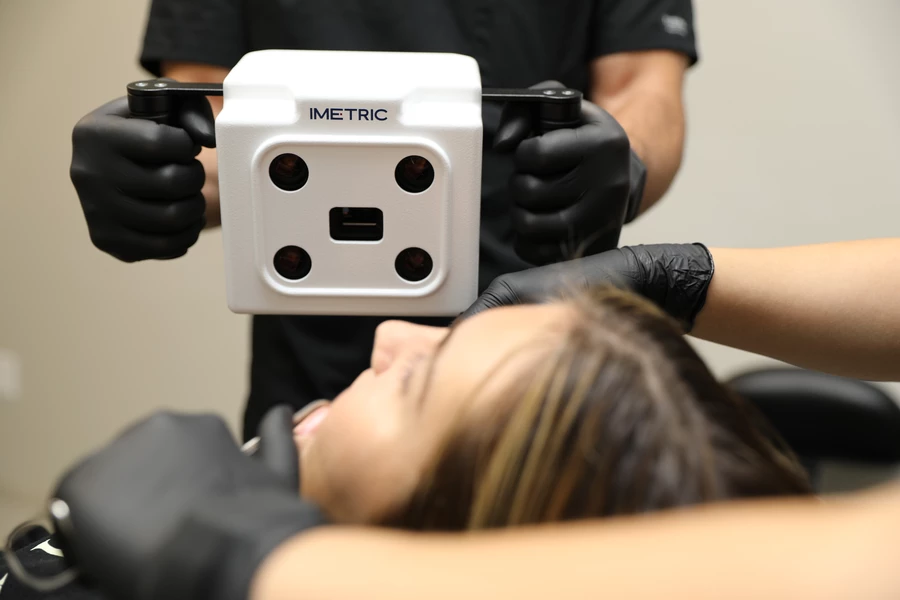
Most full-arch cases are judged the day they are delivered.
If the prosthesis seats properly, feels passive, and the patient leaves happy, the case is typically considered successful.
But long-term research tells a different story.
In full-arch implant dentistry, complications are often delayed. Strain can be built into a case from the very beginning without being visible clinically. The restoration appears stable. The patient adapts. Everything looks successful.
Then years later, complications begin to appear:
And often, no one connects those complications back to the original implant position capture.
Long-term implant studies consistently show that complications increase over time, even in restorations that initially appeared successful.
Research from Dragan Chrcanovic demonstrates that mechanical and biological complications continue accumulating in implant-supported prostheses over the years.
Matthew Thompson’s work highlights how prosthetic complications frequently emerge well beyond early follow-up periods.
Research from Jürg Wittneben reinforces an important point: restorations considered successful at delivery can still develop complications five to ten years later.
The takeaway is simple:
A case can look successful on day one and still be compromised beneath the surface.
Passive fit is often judged visually or by feel.
But even very small discrepancies at the implant interface can introduce strain into the restoration.
That strain may not cause immediate problems. The body compensates. The prosthesis functions. Everything appears stable.
Over time, however, repetitive loading can turn microscopic discrepancies into major complications, including:
The strain is introduced early. The consequences simply take years to appear.
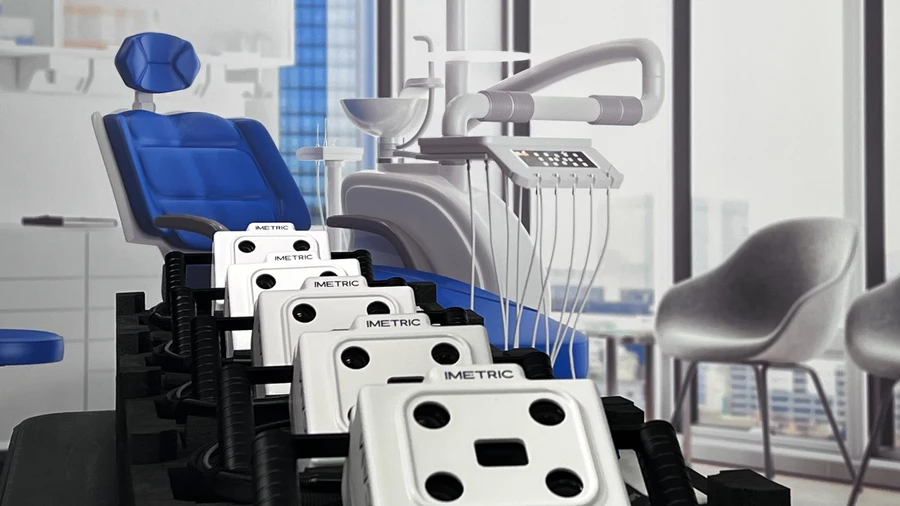
As digital workflows continue expanding, more clinicians are adopting dental photogrammetry systems to capture implant position data.
Systems such as:
…often emphasize accuracy as their primary selling point.
But accuracy at a single moment is not enough.
The more important question is:
How stable and repeatable is the implant position data over time?
In full-arch dental photogrammetry, even small positional inconsistencies can multiply across the arch. Variability during capture may introduce strain that is not visible at delivery but can contribute to long-term complications later.
“If it seats, it’s passive.”
That assumption is still widely used in full-arch dentistry — and it can be misleading.
A restoration can:
…and still carry microscopic strain.
The absence of immediate complications does not necessarily confirm accuracy. In many cases, the biological and mechanical consequences simply have not surfaced yet.
If complications can take five years or more to appear, then short-term validation has serious limitations.
That means:
This applies across the board, whether evaluating Tupel, SHINING 3D Aoralscan Elite, MicronMapper, T-Marker, ICam, or any other dental photogrammetry system entering the market.
Without long-term validation, clinicians are still making a bet on how those systems will perform years later under real-world function.
If failures are delayed, validation must focus on more than immediate fit.
Real validation should include:
Not short-term demos.
Not isolated marketing claims.
Not limited early adoption studies.
This is where long-term clinical history becomes important.
ICam has been used in full-arch workflows for more than a decade across over 2 million clinical cases worldwide. That scale and time in function provide something short-term testing cannot: evidence of long-term stability under real clinical conditions.
Here is the larger problem:
Most clinicians still do not have a simple way to independently verify whether their implant position data is stable and repeatable.
Instead, the industry often relies on:
But if long-term outcomes are the goal, those standards may not be enough.
FitMeter was developed to help address this gap.
It is a free verification tool designed to test implant position data using a simple double-measurement protocol.
If the data shifts between measurements, the system may not be producing stable implant position data.
And if the data is not repeatable, it introduces risk, even if the restoration initially appears passive.
FitMeter also contributes to a growing database of real-world full-arch cases, helping move the industry toward more objective and measurable verification standards.
Full-arch dentistry is evolving.
The question is no longer:
“Does it look accurate?”
The better question is:
“Will it remain stable over time?”
That shift changes how clinicians evaluate:
Because some of the most significant complications in implant dentistry are invisible at the beginning.
They pass every immediate test.
They look clinically successful.
They leave the clinic functioning normally.
But the strain may already be there.
The consequences simply have not appeared yet.
Do not judge systems only by how they perform on day one.
Test repeatability.
Measure stability.
Validate outcomes over time.
Because in full-arch dentistry, what you cannot see today is often what costs you tomorrow.
No products in the cart.