Your Cart Is Empty
✖No products in the cart.

In full-arch implant dentistry, precision matters at every stage of the workflow.
Even minor discrepancies in implant position data can affect passive fit and create strain within the final restoration.
Over time, those inaccuracies may contribute to:
That is why full-arch implant workflows increasingly depend on systems capable of delivering:
When evaluating dental photogrammetry systems, several factors directly impact long-term performance and predictability.
Calibration helps ensure a system maintains accuracy over time.
Without ongoing calibration capabilities, even small deviations may gradually affect implant position capture and long-term restorative precision.
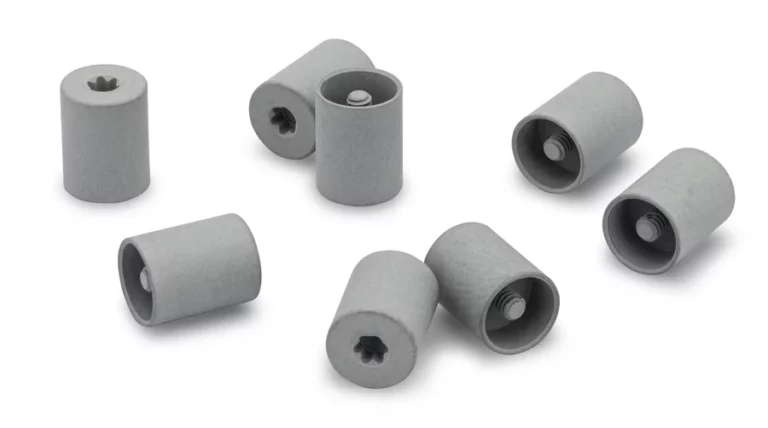
Scan body design and material play a major role in implant accuracy.
Materials prone to deformation, thermal expansion, or sterilization distortion can introduce inconsistencies during scanning.
Titanium scan bodies are often preferred because they offer:
Systems with more capture targets and viewpoints generally provide stronger redundancy and error compensation.
This becomes especially important in:
A predictable scanning workflow reduces variability between operators and improves overall efficiency.
Systems with stronger CAD/CAM integration and easier repeatable workflows can help reduce doctor chair time while improving restorative consistency.
As more systems enter the market, clinicians are evaluating how each platform performs in complex implant workflows.
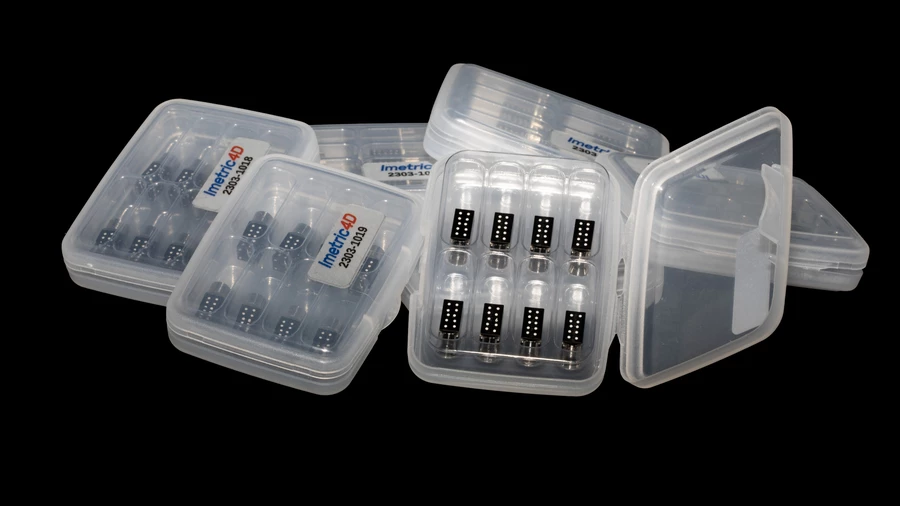
ICam by Imetric was specifically designed for full-arch implant photogrammetry and focuses heavily on repeatability and passive fit accuracy.
Key features include:
ICam also uses a multi-camera acquisition approach designed to minimize stitching distortion and reduce workflow variability in complex cases.
PIC Dental is one of the more widely recognized dental photogrammetry systems and is commonly used in full-arch implant workflows.
However, several workflow considerations may impact long-term predictability, including:
In complex full-arch cases, these factors may introduce additional variability during implant capture.
MicronMapper offers a simplified implant capture workflow but may provide less redundancy in complex full-arch restorations.
Potential limitations can include:
While capable in certain workflows, predictability in highly complex full-arch cases remains an important consideration.
Tupel has gained attention as a lower-cost dental photogrammetry option.
However, lower-cost systems may also involve tradeoffs in areas such as:
For clinicians performing complex implant cases regularly, long-term stability and consistency remain critical evaluation factors.
SHINING 3D Aoralscan Elite combines intraoral scanning with implant scanning capabilities.
While highly effective for teeth and soft tissue scanning, it was not originally designed as a dedicated full-arch implant photogrammetry system.
Potential limitations for full-arch workflows may include:
As a result, full-arch implant precision may differ from dedicated photogrammetry systems designed specifically for implant position capture.
Workflows using systems such as ScanBridge, ScanDar, and other intraoral scanner-based methods can work well in smaller restorative cases but often face challenges in full-arch implant dentistry.
Common limitations may include:
As arch length and case complexity increase, maintaining passive fit becomes more difficult with conventional intraoral scanning workflows alone.
One of the biggest differentiators between systems is camera architecture.
Two-camera systems can be more affordable and easier to operate, but they may introduce limitations in:
Multi-camera systems provide additional viewpoints and redundancy, helping improve positional consistency and reduce distortion in more complex restorative cases.
This becomes especially important when scanning:
As digital full-arch dentistry continues evolving, more clinicians are prioritizing systems designed to improve:
The conversation is shifting from simply “digital dentistry” toward measurable long-term restorative predictability.
The best dental photogrammetry system is not necessarily the newest or least expensive option.
For full-arch implant dentistry, long-term success depends on consistent implant position accuracy, workflow stability, and predictable passive fit over time.
As clinicians evaluate systems like ICam, PIC Dental, MicronMapper, Tupel, SHINING 3D Aoralscan Elite, and intraoral scanner-based workflows, the most important question becomes:
How reliably can the system reproduce accurate implant position data across real-world full-arch cases?
Because in implant dentistry, even microscopic inaccuracies introduced during capture can become major complications years later.
No products in the cart.