Your Cart Is Empty
✖No products in the cart.

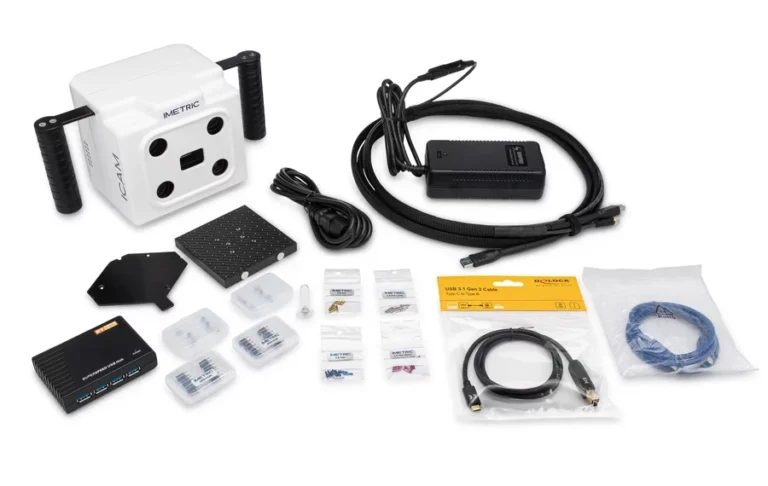
Digital dentistry continues to evolve rapidly, but faster workflows do not automatically mean better long-term outcomes.
As the industry moves into 2026, one trend is becoming increasingly clear: full-arch implant cases require more than modern scanning technology. They require systems designed for precision, repeatability, and long-term passive fit.
The industry is beginning to confront a challenge that has quietly existed for years — hidden fit issues caused by small, often invisible inaccuracies during implant position capture.
Many clinicians today use digital scanning systems that feel efficient, modern, and clinically reliable.
However, many of these systems were not specifically designed to ensure passive fit in full-arch implant restorations. Even small inaccuracies in implant position data can compound across the arch and contribute to long-term complications.
Importantly, this is not a clinician problem.
Dentists are not trained as metrology or precision manufacturing specialists, and passive fit cannot always be confirmed visually at delivery.
In many cases, the most significant complications do not appear immediately. Problems such as:
…may not surface until two to five years after delivery.
That reality is driving the next phase of innovation in dental 3D scanning technology: improving predictable long-term outcomes, not just workflow speed.
As more labs and DSOs increase full-arch case volume, predictable passive fit is becoming both a clinical and operational priority.
Even a small percentage of remakes, prosthetic complications, or implant failures can become costly over time.
Passive fit is no longer viewed as a “nice-to-have.” It is becoming essential for scalable, long-term success in full-arch implant dentistry.
Every step in a digital workflow introduces some level of deviation.
From scanning to design to milling, those small inaccuracies accumulate — a process known as tolerance stacking.
When enough variability builds across the workflow, the final restoration can exceed the acceptable passive fit threshold.
The issue is rarely one catastrophic error. More often, it is the cumulative effect of multiple small inaccuracies adding together throughout the workflow.
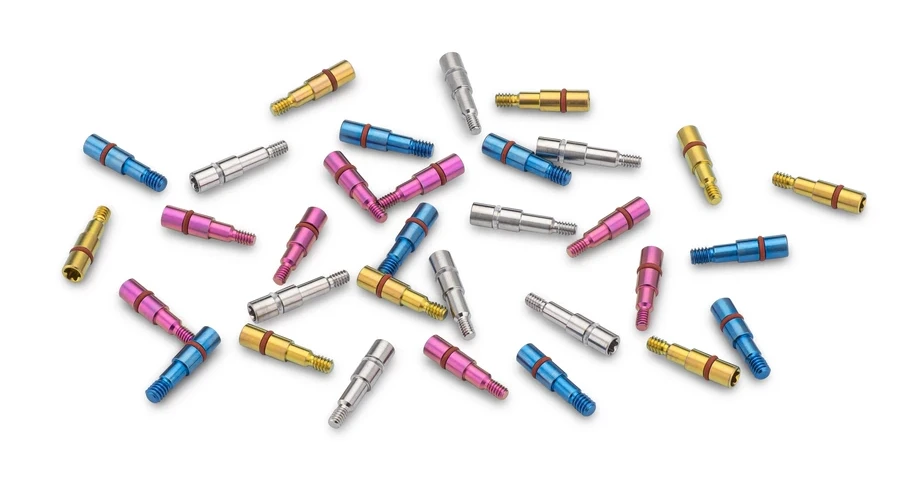
As dental photogrammetry becomes more widely adopted for full-arch implant scanning, clinicians are learning that not all systems are engineered to achieve the same level of repeatability or passive fit accuracy.
Different technologies approach implant capture differently, and those differences matter.
PIC Dental and Micron Mapper use fixed-camera systems that rely heavily on image stitching software to reconstruct implant positions.
While widely used, stitching-based workflows can introduce variability and distortion, particularly in complex or highly angled full-arch cases.
Even experienced users may encounter challenges achieving predictable passive fit because the workflow itself introduces opportunities for positional variation.
Tupel has gained attention as a more affordable dental photogrammetry option.
However, lower-cost systems may lack the extensive long-term validation and large-scale clinical data needed to confirm consistent repeatability in demanding full-arch workflows.
While these systems may function adequately in some cases, long-term predictability remains an important consideration for clinicians managing complex implant restorations.
SHINING 3D systems are well known for intraoral scanning of teeth and soft tissue.
However, they were not originally designed as dedicated dental photogrammetry systems for capturing highly precise implant positions in full-arch workflows.
While highly capable within their intended applications, achieving predictable passive fit in full-arch implant cases requires a different level of implant position accuracy and repeatability.
ICam by Imetric was designed specifically to reduce the types of variability that contribute to hidden full-arch fit complications.
Rather than relying on image stitching, ICam uses four synchronized moving cameras to capture implant positions in a single distortion-free acquisition.
This approach helps minimize:
ICam has been used in more than 1 million full-arch implant cases worldwide and is designed to support consistent passive fit across varying clinician experience levels and case complexities.
Clinicians and labs are becoming more skeptical of marketing-based accuracy claims alone.
In 2026, more practices are expected to evaluate systems based on measurable real-world fit performance and repeatability.
As long-term complications emerge from earlier digital workflows, practices will continue prioritizing systems that consistently reduce variability and remakes.
Predictability is becoming one of the most valuable differentiators in full-arch implant dentistry.
Clinicians are becoming increasingly aware that long-term fit issues are often workflow problems — not individual user failures.
Understanding where errors originate and how to minimize them will become a major focus for high-performing implant teams over the next several years.
The future of dental 3D scanning is not just about faster scans or newer software.
It is about improving long-term outcomes for full-arch implant patients.
For years, many clinicians relied on systems that appeared accurate at delivery but lacked the repeatability needed for predictable long-term passive fit.
Today, the industry is shifting toward tools specifically engineered for full-arch implant precision, stability, and long-term reliability.
Because patients deserve more than restorations that simply “feel okay” on day one.
They deserve restorations designed to remain stable for years to come.
No products in the cart.