
Your Cart Is Empty
✖No products in the cart.
TL;DR: Photogrammetry has become one of the most accurate and precise methods for capturing implant positions in modern dentistry. While it can benefit nearly any implant workflow, its greatest clinical advantages are seen in full-arch restorations, immediate loading protocols, multiple implant cases, and situations where passive fit is critical.
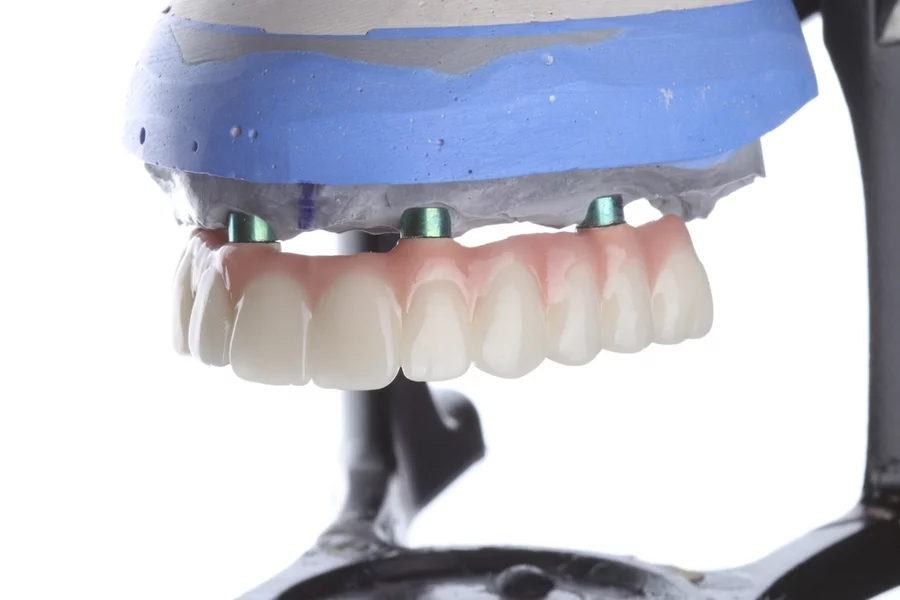
Every implant restoration depends on one critical step: accurately capturing implant positions.
If implant positions are transferred incorrectly, the final prosthesis may not fit as intended. Even small discrepancies can lead to chairside adjustments, prosthetic complications, increased laboratory costs, and additional appointments.
However, not all implant cases place the same demands on the impression workflow.
A single implant restoration may tolerate minor discrepancies without significant clinical consequences. A full-arch restoration supported by multiple implants offers far less room for error.
This is why photogrammetry has become increasingly valuable in advanced implant dentistry.
The more complex the case, the more important measurement precision becomes.
Traditional impressions and intraoral scanners capture surfaces. Photogrammetry captures measurements.
Using specialized scanbodies and calibrated imaging, photogrammetry directly calculates the three-dimensional position of implants.
Instead of relying on stitched images or physical impression materials, implant positions are measured mathematically.
This distinction is important because errors tend to accumulate as implant number and restorative span increase.
Research has shown that photogrammetry systems demonstrate significantly greater precision than intraoral scanners when recording implant positions in complete-arch restorations.
The question is no longer whether photogrammetry works. The more relevant question is where it makes the biggest clinical difference.
Photogrammetry’s greatest advantages are seen in complex cases where precision is critical. Here are the cases where dental implant photogrammetry make the biggest clinical difference in implant placement and treatment planning.
If there is one clinical application where photogrammetry delivers the greatest value, it is full-arch dental implants.
When four, six, or more implants support a full arch, even minor inaccuracies can affect fit.
A small error at one implant may seem insignificant. Across a complete arch, those errors can compound and create stress within the framework.
The result may include:
Achieving passive fit becomes substantially more challenging as arch length increases. This is precisely why many clinicians have adopted photogrammetry for All-on-X and complete-arch workflows.
The larger the restoration, the greater the benefit of accurate implant position measurement.
Immediate loading has transformed implant dentistry. Patients appreciate receiving a provisional restoration on the day of surgery, while clinicians benefit from streamlined treatment workflows.
However, immediate loading also removes much of the margin for error. There is limited opportunity for verification, remakes, or impression refinement.
The prosthesis must fit precisely from the start.
Because photogrammetry directly measures implant positions, it provides clinicians with a higher level of confidence when designing and delivering immediate-load restorations.
In these cases, precision is not simply desirable; it is essential.
Even when a case does not involve a full arch, the complexity of the procedure increases with every additional implant needed.
Two implants are generally easier to capture than four. Four are easier than six and so on. Each additional implant introduces another spatial relationship that must be recorded precisely.
Photogrammetry becomes particularly valuable whenever clinicians are restoring:
As the number of implants increases, direct measurement becomes increasingly advantageous compared to estimation-based workflows.
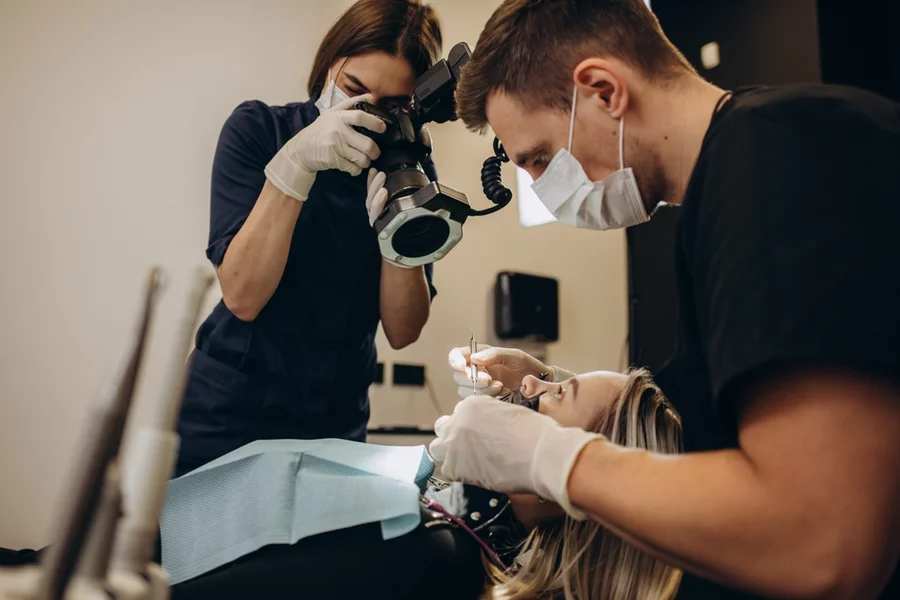
As digital dentistry continues to evolve, practices are increasingly seeking workflows that eliminate physical impressions and stone models entirely.
Photogrammetry fits naturally into this approach when paired with intraoral scanning.
Combining photogrammetric implant position data with intraoral scans of soft tissue and anatomy creates a complete digital patient record.
The result is:
For practices committed to digital implant dentistry, photogrammetry and intraoral scanning often work together as complementary technologies.
Photogrammetry can improve precision in many implant workflows. But its greatest clinical impact is seen when complexity increases:
These are the situations where direct measurement provides a meaningful advantage over estimation.
Discover how ICam helps clinicians achieve precise implant measurements for the most demanding implant cases.