
Your Cart Is Empty
✖No products in the cart.
TL;DR: Dental photogrammetry helps clinicians capture implant positions with exceptional precision, making it easier to achieve passive-fitting full-arch restorations. For full-mouth dental implant cases, this can lead to more predictable outcomes, fewer adjustments, and a more efficient digital workflow.
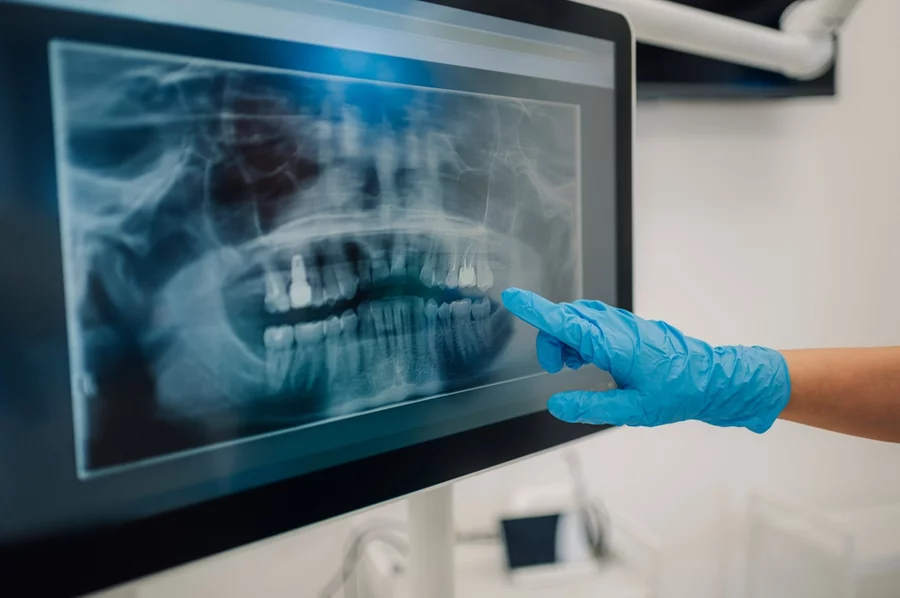
Replacing an entire arch of teeth with dental implants is one of the most life-changing treatments in modern dentistry. Dental implants for full mouth restoration can boost confidence, improve chewing and speech, and enhance overall quality of life. For clinicians, however, these cases require a high level of precision to achieve predictable, long-term results.
One of the biggest challenges in full-arch implant dentistry is accurately capturing the position of multiple implant sites. Even small errors can affect how well the final prosthesis fits, which can lead to complications. As digital dentistry continues to evolve, more clinicians are adopting technologies that improve precision and make workflows more efficient.
Dental photogrammetry has become one of the most important innovations for full mouth dental implants. By providing highly accurate implant position data, it helps clinicians and laboratories create better-fitting restorations.
Dental photogrammetry is a digital technology that uses multiple photographs taken from different angles to calculate the precise three-dimensional position of dental implants.
Rather than scanning soft tissue, teeth, or impression material, photogrammetry focuses specifically on implant positions. Special scan bodies are attached to the implants, and the system captures images from multiple perspectives. Advanced algorithms then calculate the exact spatial relationship between each implant.
Unlike conventional impression techniques, photogrammetry directly measures implant positions in space. The result is an extremely accurate digital representation of the implant positions.
That data is then used to design and manufacture a full-arch prosthesis with higher precision. For full mouth dental implants, this makes all the difference.
Full-arch implant restorations are among the most demanding procedures in restorative dentistry. Unlike single implants, full mouth cases require multiple implants to work together as a single system.
When four, six, or more implants are splinted together by a rigid prosthetic framework, even the smallest discrepancies in implant position can affect the overall fit and stability of the restoration.
A small error on one implant may seem insignificant. However, across an entire arch, those errors can accumulate and create a framework that does not fit passively.
These errors can contribute to:
For this reason, accurately capturing implant positions is one of the most critical steps. The more precise the data, the greater the likelihood of achieving a passive-fitting restoration.
This need for precision is one of the primary reasons dental photogrammetry has become such an important technology.
The use of dental photogrammetry for dental implants continues to grow because of the challenges clinicians see with traditional impression methods.
Traditional implant impressions have been used successfully for many years, but they are technique sensitive. There are several sources for errors in the process, such as:
Each step introduces opportunities for small errors which can become cumulative. When added together, these errors can be catastrophic to the final restoration.
While experienced clinicians can achieve excellent results, conventional impressions often require additional appointments, verification jigs, and prosthetic adjustments to ensure an acceptable fit.
Digital intraoral scanners have improved workflows significantly. However, scanning a full arch with multiple implants is demanding for any scanner.
With full mouth dental implants, intraoral scanners have limitations:
While intraoral scanners offer many benefits, accurately capturing implant positions across a full arch can still be challenging.
Dental photogrammetry was developed to address the challenge of accurately capturing implant positions across large spans.
Rather than building a digital model through stitched images, photogrammetry directly calculates the precise location of each implant.
This creates several important advantages. Let’s talk about them.
The primary benefit is precision. By directly measuring implant positions, photogrammetry minimizes cumulative errors that can occur with conventional impressions and scanning workflows.
The result is highly accurate implant data that provides a stronger foundation for design and manufacturing.
Passive fit is one of the most important objectives in full-arch dental implant. When implant positions are captured accurately, laboratories can fabricate frameworks that seat more predictably and require fewer adjustments.
This reduces mechanical stress throughout the restorative system and contributes to long-term treatment success.
Traditional workflows involve multiple verification steps to ensure precision. Using photogrammetry for dental implants streamlines the process by providing highly reliable data the first time.
This often results in:
This can translate into a smoother treatment experience for both clinicians and patients.
When patients receive temporary teeth soon after dental implant surgery, precision is important. Clinicians need to know if the implant positions have been captured correctly. Photogrammetry helps provide confidence.
For immediate loading cases, photogrammetry delivers precise implant data, making it easier to create full-arch restorations that fit as planned.

Photogrammetry is often used for full mouth dental implants, but it can also improve precision in many other procedures where precise positioning is important.
In general, it is most valuable when clinicians:
Some of the most common applications include:
Full-arch restorations supported by multiple implants require precise implant position capture to achieve a passive fit.
When provisional restorations are delivered shortly after implant placement, there is little room for error. Photogrammetry supports efficient digital workflows by providing reliable implant position data.
Cases involving angled implants, challenging anatomy, or large implant spans can be difficult to capture using traditional impression techniques.
Photogrammetry is effective in these situations because it accurately measures the spatial relationship between implants regardless of their orientation.
As more practices adopt digital dentistry, photogrammetry has become an important tool for integrating implant data into CAD/CAM design and manufacturing processes. It helps create a seamless connection between the surgical, restorative, and laboratory phases of treatment.
Any restoration that connects multiple implants can benefit from the enhanced precision. By reducing discrepancies in implant position data, clinicians can improve the likelihood of achieving a passive fit and minimize complications.
Many digital technologies emphasize speed. While efficiency matters, speed alone does not determine clinical success. In full-arch implant dentistry, precision is what matters most.
A faster workflow provides little value if it results in:
The most effective workflow is one that combines efficiency with precision. Dental photogrammetry helps achieve that balance by focusing on the foundation of every successful full-arch restoration: accurate implant position data.
Digital dentistry continues to evolve rapidly, but one principle remains unchanged. Accurate data produces better outcomes.
As clinicians strive to deliver predictable, efficient, and long-lasting full-arch restorations, photogrammetry has become one of the most important technological advancements in implant dentistry.
By providing highly accurate implant position data, photogrammetry helps eliminate many of the variables that have historically complicated full-mouth implant treatment plans. The result is a workflow that supports:
For clinicians committed to excellence, dental photogrammetry is becoming the new standard for capturing implant positions with confidence.
The answer depends on the type of implant cases being treated. For simple implant cases, traditional workflows may continue to provide acceptable results. However, with full-mouth dental implants, the value of photogrammetry becomes clear.
Full-arch cases leave little room for error. Multiple implants must work together as a single system, and even small errors can lead to problems. These issues may lead to extra adjustments, additional appointments, remakes, or complications over time. Beyond material costs, they can also use more laboratory resources and affect the overall patient experience.
While every practice should evaluate new technology based on its own needs, clinicians who regularly perform All-on-X, immediate loading, or full-mouth implant cases often see benefits beyond improved precision. More reliable data, smoother workflows, and fewer unexpected restorative issues can help save time and improve efficiency.
If you’re looking for a more accurate and predictable way to capture implant positions for full-arch restorations, dental photogrammetry is a technology worth understanding.
The ICam system uses true photogrammetry to capture implant positions with exceptional precision, helping clinicians and laboratories create passive-fitting restorations with greater confidence.
By eliminating many of the challenges associated with traditional impression techniques, ICam supports a streamlined digital workflow designed specifically for full-arch implant cases.